

Cancer Immunothrapy
“The power of immune system” is essential for cancer treatment and prevention
The immune system is deeply involved in both the development and recurrence of cancer. We believe that maintaining or enhancing body’s immune system can support treatment outcomes, prevent recurrence, and reduce side effects.
Role of Immunotherapy 01The foundation of cancer treatment
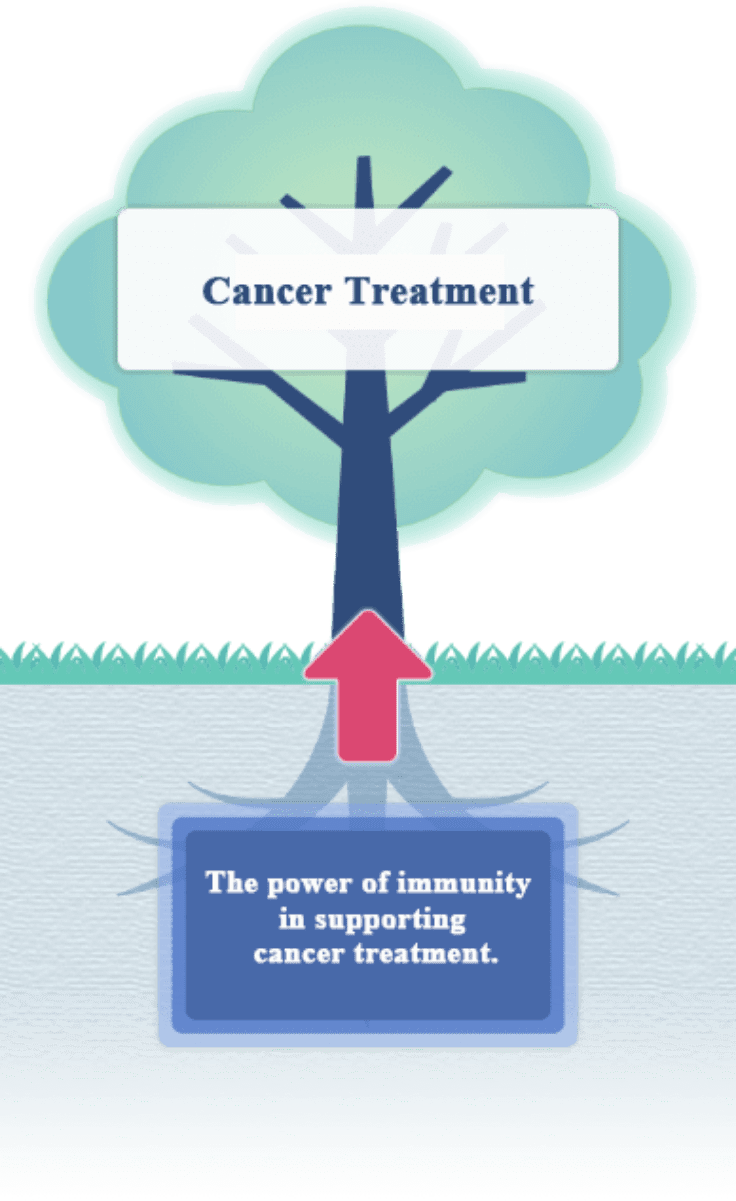
If a tree represents cancer treatment, then the immune system is its roots. Though invisible, the immune system provides the essential foundation that supports effective cancer care.
Role of Immunotherapy 02Enhancing treatment efficacy
By maintaining and strengthening the immune system—the “roots” of cancer treatment—it supports the entire treatment process. Strong immune system enables cancer treatments to perform at its full potential.
Role of Immunotherapy 03Reducing side effects
When the roots are weak, the tree (cancer treatment) might fall under its own weight. Reinforcing the immune system helps reduce the burden of cancer treatment and provides a stable foundation that can endure.
Cancer Treatment at Our Institution (1)Dendritic Cell Vaccine Therapy:
Targeting Cancer Through the Immune System’s Control Center
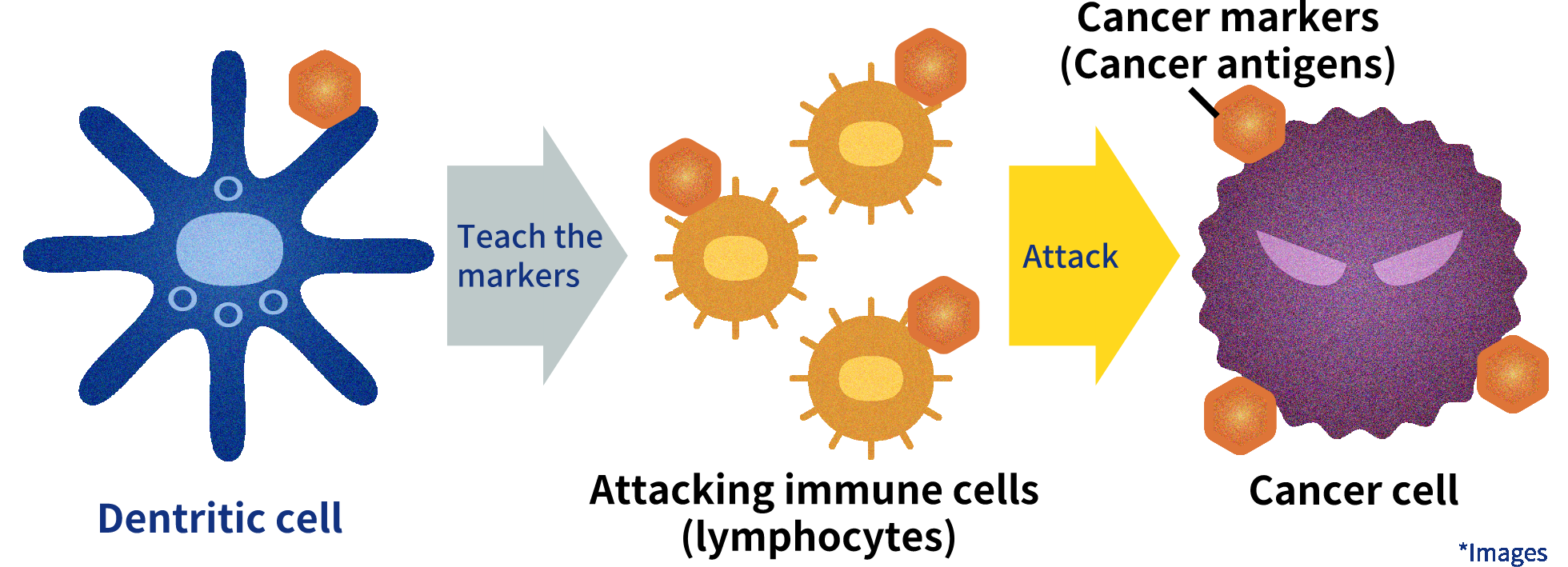
Dendritic cells are a type of immune cell that gather information (tumor markers) about foreign substances such as cancer cells and relay it to the body’s attacking immune cells. Dendritic cell vaccine therapy uses this function by artificially loading dendritic cells with cancer-specific antigens (tumor markers) and reintroducing them into the body. This approach strengthens the body’s natural immune response to cancer.
Treatment Process
1. Extraction
A blood sample is collected, and immune cells—the precursors to dendritic cells—are extracted from the blood.
2. Cell Culture
In the cell production clean room, dendritic cells are taught to recognize the specific characteristics (markers) of the cancer.
What are the cancer antigens (tumor markers)?
Cancer cells often produce unique proteins or express certain proteins at much higher levels than normal cells. These proteins are called cancer antigens.
Cancer antigens often result from mutations in the cancer cell’s genetic code, producing abnormal proteins that the immune system recognizes as foreign.
Immune cells such as lymphocytes use these antigens as markers to distinguish cancer cells from normal ones, allowing them to target and attack the cancer.
There are many types of cancer antigens, and the effectiveness of dendritic cell vaccine therapy depends on which antigen is selected for treatment.
3. Reintroduction into the Body
The enhanced dendritic cells—now equipped with the ability to recognize cancer markers—are reintroduced into the patient’s body as a vaccine.
4. Attack on Cancer Cells
The dendritic cells present the learned tumor markers to attacking immune cells (such as lymphocytes). These immune cells then identify and target cancer cells that display the same markers, launching a precise and coordinated immune response.
Cancer Treatment at Our Institution (2)Adopting next-generation cancer antigens (markers)
We have adopted cutting-edge technology developed through joint research with a university hospital to provide two advanced types of dendritic cell vaccine therapies.
Treating various cancer types using artificial cancer antigens (markers)
“WT1 peptide” × “dendritic cell vaccine therapy”
The WT1 peptide is based on the WT1 protein, which is found in many types of cancer. Professor Haruo Sugiyama of the Faculty of Medicine at Osaka University developed this artificially synthesized peptide to activate immune cells.
WT1 has also been found to be expressed in cancer stem cells—the progenitor cells that give rise to cancer. Because of this, the WT1 peptide is now being widely used in cancer treatment, including as a target in dendritic cell vaccine therapy.
Customized treatment at the genetic level
“Neoantigen” × “dendritic cell vaccine therapy”
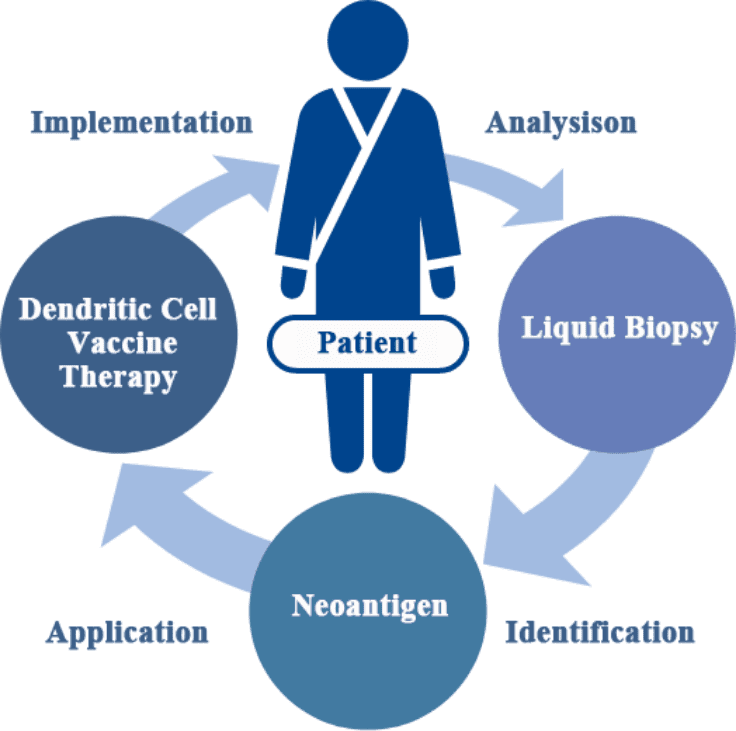
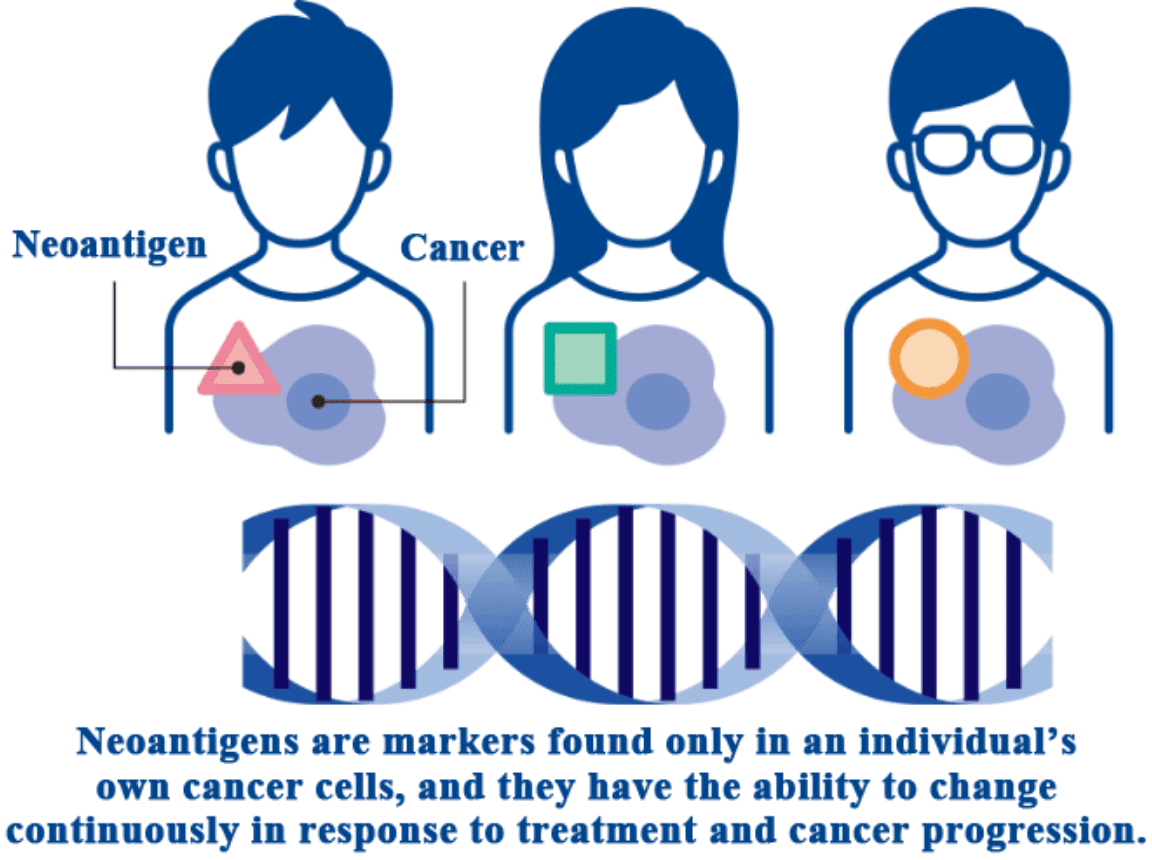
Neoantigens are a newly formed protein fragments (antigens) that are produced by cancer cells due to DNA mutations, but are not found in normal cells. Neoantigens are analyzed thanks to advances in gene analysis technology. Cancer cells and its genetic mutation will continuously change in response to a cancer treatment and/or progression, hence the neoantigens will also continue to alter in its protein sequence and/or in detected number. By applying neoantigens to dendritic cell vaccine therapy, the treatment will target each patient’s unique cancer at the genetic level.
This immunotherapy is based on the clinical trial on safety and treatment feasibility, conducted in collaboration with the Jikei University School of Medicine.
Analyzing current genes without an invasive tissue extracton
Our center has introduced “liquid biopsy,” a technique that analyzes the genetic information of cancer through a simple blood test. This allows to detect and identify neoantigens without the need for cancer tissue.
By regularly analyzing and identifying neoantigens, we provide personalized treatment at the genetic level—tailored to “attack the cancer at that particular moment.